

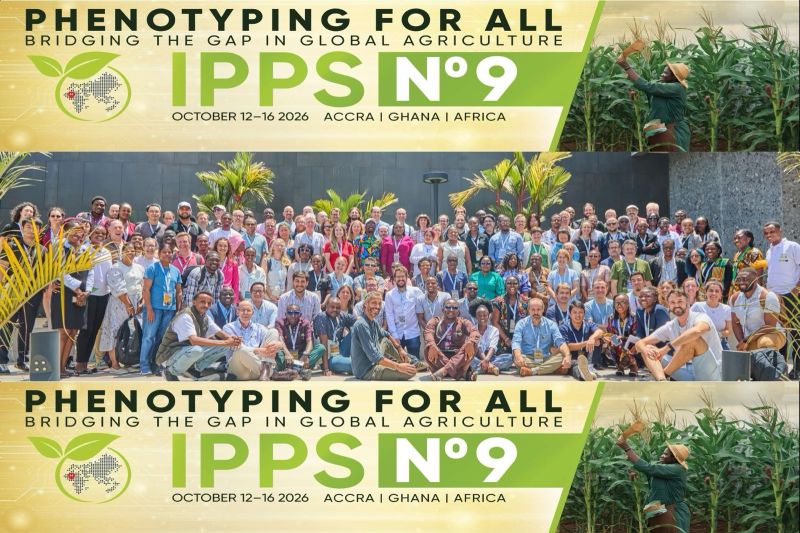
EMPHASIS and IPPS9: Advancing plant phenotyping through collaboration
The 9th International Plant Phenotyping Symposium (IPPS9) took place in Accra, Ghana, from 12 to 16 October 2026, bringing together an international community of scientists, researchers, plant breeders, technology developers and industry partners.
Organised by the International Plant Phenotyping Network (IPPN) and the West Africa Centre for Crop Improvement (WACCI), the symposium was held under the theme “Phenotyping for All: Bridging the Gap in Global Agriculture.” Its first edition on the African continent provided a platform for exchanging knowledge and exploring how plant phenotyping can address diverse agricultural challenges.
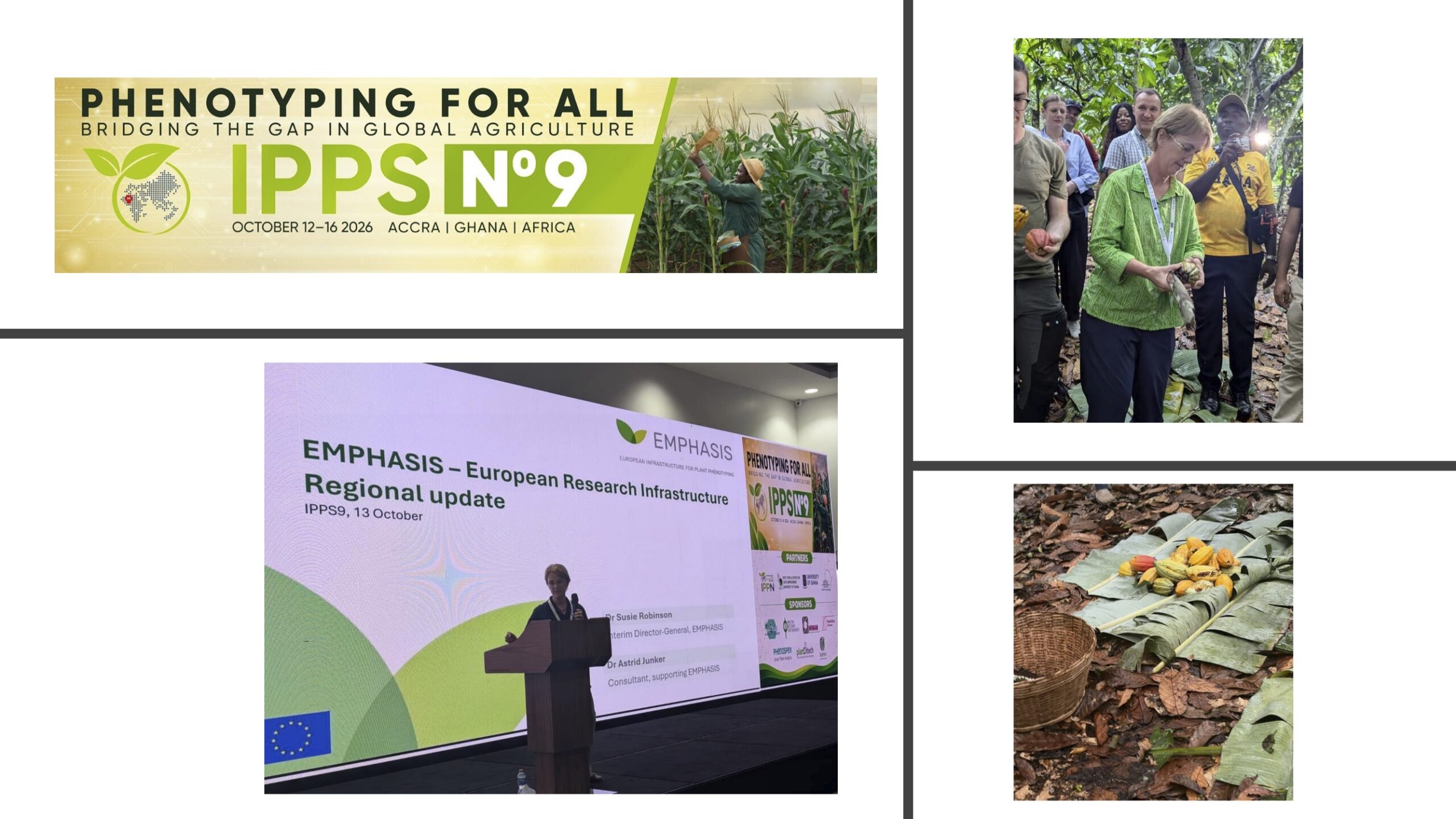
EMPHASIS was well represented at the conference, with delegates from member countries and from our Coordination Office in attendance. We hosted a daily series where an update was given from each global region on new developments, future plans, and how the region was playing its part in ‘bridging the gap’ in plant phenotyping, to make this an accessible approach for all.
Our EMPHASIS update included information about our upcoming legal establishment as a European Research Infrastructure Consortium, about our access programmes, and our forward strategy for new scientific and technological initiatives.
EMPHASIS also co-hosted two sessions of ‘flash presentations’ from talented early career professionals, giving a window into the exciting new work being undertaken by talented young scientists from Africa and other regions.
Learn more about IPPS9: 9th International Plant Phenotyping Symposium.

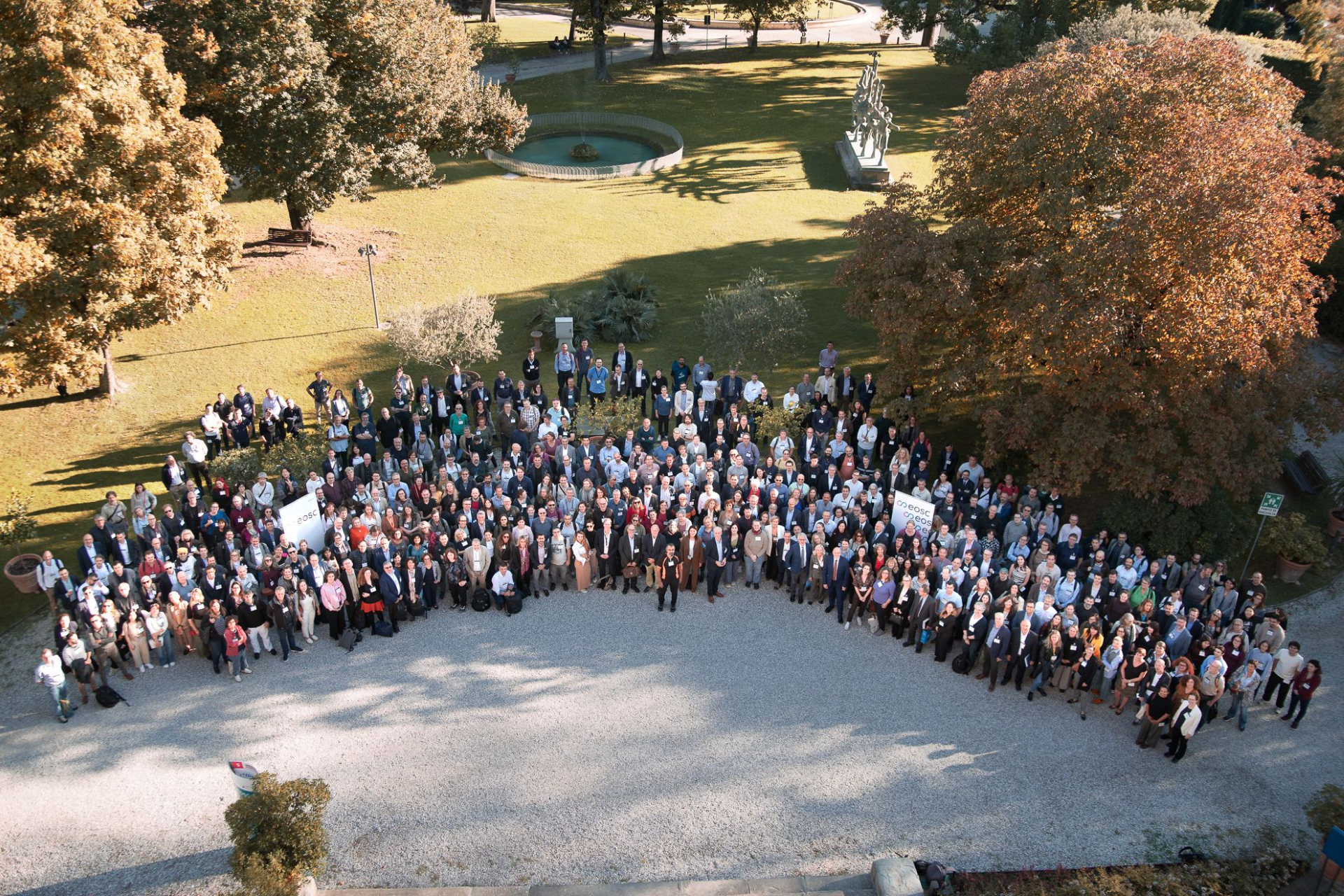
EMPHASIS at the EOSC Symposium 2026: Supporting a more connected European research ecosystem
A milestone for the EOSC Federation
Collaboration is key to open science
Looking ahead

CROPADAPT2026: Enhancing Multi-Stress Tolerance for Crop Resilience
The symposium CROPADAPT2026: Enhancing Multi-Stress Tolerance for Crop Resilience will take place on October 14–15, 2026 in Ghent, Belgium. Organized as a young scientist-led initiative, the event will bring together researchers, students, and professionals from across the plant sciences community.
As agriculture faces increasing environmental and climate-related challenges, improving crop resilience has become a major research priority. CROPADAPT2026 will provide a platform for scientific exchange and interdisciplinary discussion on how plants respond and adapt to multiple stress factors.
The scientific program is structured around two complementary themes:
- Immediate resilience – focusing on how plants cope with environmental stress under current conditions
- Future resilience – exploring innovative strategies and technologies to develop the next generation of resilient crops
The symposium aims to foster collaboration across disciplines and career stages while highlighting emerging research in plant biology, crop science, and sustainable agriculture.
📅 October 14–15, 2026
📍 Ghent, Belgium
Further information, including program updates and registration details, is available on the official event website: https://www.cropadapt2026.be/en/
Horizon Europe-funded MICROBES-4-CLIMATE project kicks-off
Today marks a significant milestone, MICROBES-4-CLIMATE, a project under the Horizon Europe programme, officially kicks-off its ambitious journey. Bringing together 31 dedicated partners from 13 countries, this groundbreaking project seeks to unravel the intricate interactions between soil, microorganisms, plants, and the environment.
The primary goal of MICROBES-4-CLIMATE is to elevate our understanding of this vital network. It is envisioned to provide the researchers with an unparalleled, integrated network of infrastructures, fostering collaboration and amplifying collective knowledge on this crucial subject. Each institution brings its unique expertise, contributing to the multidisciplinary approach that sets M4C apart.
MICROBES-4-CLIMATE has a duration of 5 years in which the consortium is committed to upscale the share of invaluable data, transcending borders, and accelerating progress in environmental science. Microbial biodiversity, soil health and fertility, plant microbiome, crop productivity, and climate resilience are just a few of the focus areas that will be explored. The kick-off meeting will take place on the 20th and 21th of February 2024 in Braga.
The consortium includes: MIRRI-ERIC, UVEG-CECT, UGENT, NKUA, UNITO, CRN, CABI, SPI, IPK, INRAE, FJZ, ALSIA, PHYTOBIOMES ALLIANCE, UMINHO, UNOTT, WU, UU, FEM, CREA, AIT, HMGU, LIFEWATCH ERIC, AnnaEE ERIC with the affiliated entities UNIV RENNES, CIHEAM-IAMB, CNRS, ISSAPPNP, LUKE, ULIEGE, UH and the affiliated partner SIB.
Join us on this extraordinary expedition, where innovation meets impact, and the quest for knowledge transforms the future!
For more information on, please visit: The Project Coordinator, MIRRI-ERIC or the MICROBES-4-CLIMATE project page


EMPHASIS training on affordable phenotyping in Matera-Metaponto, Italy
The topics cantered around
- how to approach a phenotyping experiment in terms of experimental design
- use of different particularly affordable tools
- environmental monitoring
- data management and modelling which was addressed in lectures
- practical hands-on exercises and data analyses sessions, including practical solutions with data sets provided by the course participants.
Based on the large demand, EMPHASIS will further develop and provide further training on different aspects of plant phenotyping.
SusCrop / FoPD video contest on sustainable crop production
Please disseminate this widely asthe contest is open to EVERYBODY across the world for the following four categories:
- School children & students
- Education / research institutes / academia
- Farmers
- Open category (artists, enthusiasts …)
to reflect, communicate and inspire on ‘what sustainable crop production means to you?’
The first prize of each category is 1000 euro
Information is available at the SusCrop video contest webpage and attached here:
- ERA-Net SusCrop VIDEO CONTEST 2022 announcement updated (English)
- + announcement text updated in Danish, Dutch, Estonian, French, German, Polish, Spanish, Turkish
- Statement of Agreement.
Video submission has to be done via WeTransfer to nikki.declercq@ilvo.vlaanderen.be AND to eline.dewispelaere@ilvo.vlaanderen.be
Questions
Nikki Declercq
Eline Dewispelaere

EOSC-Life: Workflowhub
The registry supports any workflow in its native repository. WorkflowHub aims to facilitate discovery and re-use of workflows in an accessible and interoperable way. This is achieved through extensive use of open standards and tools, including Common Workflow Language (CWL), RO-Crate, BioSchemas and TRS, in accordance with the FAIR principles.
Resources:
Implementing FAIR Digital Objects in the EOSC-Life Workflow Collaboratory
https://zenodo.org/record/4605654