

The Flemish Government has officially announced its dedicated support for EMPHASIS ERIC
Big news for European plant science! The Flemish Government has officially announced its dedicated support for EMPHASIS ERIC.
We are thrilled to share that the government has approved a ‘Host Country Premium’ of €1.8 million for the first five years of EMPHASIS operation. This new commitment comes on top of their previous generous contribution of €1.8 million to VIB for the development and implementation of our pan-European plant phenotyping infrastructure.
A sincere thank you to the incredible team at the Departement WEWIS – economie, wetenschap en innovatie, especially Liselotte De Vos, for their exceptional dedication in securing this vital funding.


European Life Science RIs Position Paper on FP10
The European Life Science Research Infrastructures (LS-RIs) have released a joint position paper titled “Driving Innovation and Collaboration: A Strategic Vision for European Life Science Research Infrastructures in Framework Programme 10 (FP10).” This paper presents key messages for the upcoming Framework Programme for Research (FP10) and is timed with the current evaluation of Horizon Europe. It aims to influence the development of research, technology, and innovation policies beyond 2027, ensuring that FP10 priorities include essential fields of life science research supported by Research Infrastructures.
The key messages for consideration are:
- Strengthening established European Research Infrastructures as strategic assets.
- Securing adequate funding.
- Fostering use and visibility of RIs.
- Providing cluster funding.
- Allocating resources for impact assessment.
- Leveraging the emergent synergies of INFRA-ERV projects and continue TNA budget.
As Europe prepares for FP10,i t is crucial to ensure that LS-RIs continue to drive scientific innovation and foster collaboration.
The full paper can be read here.

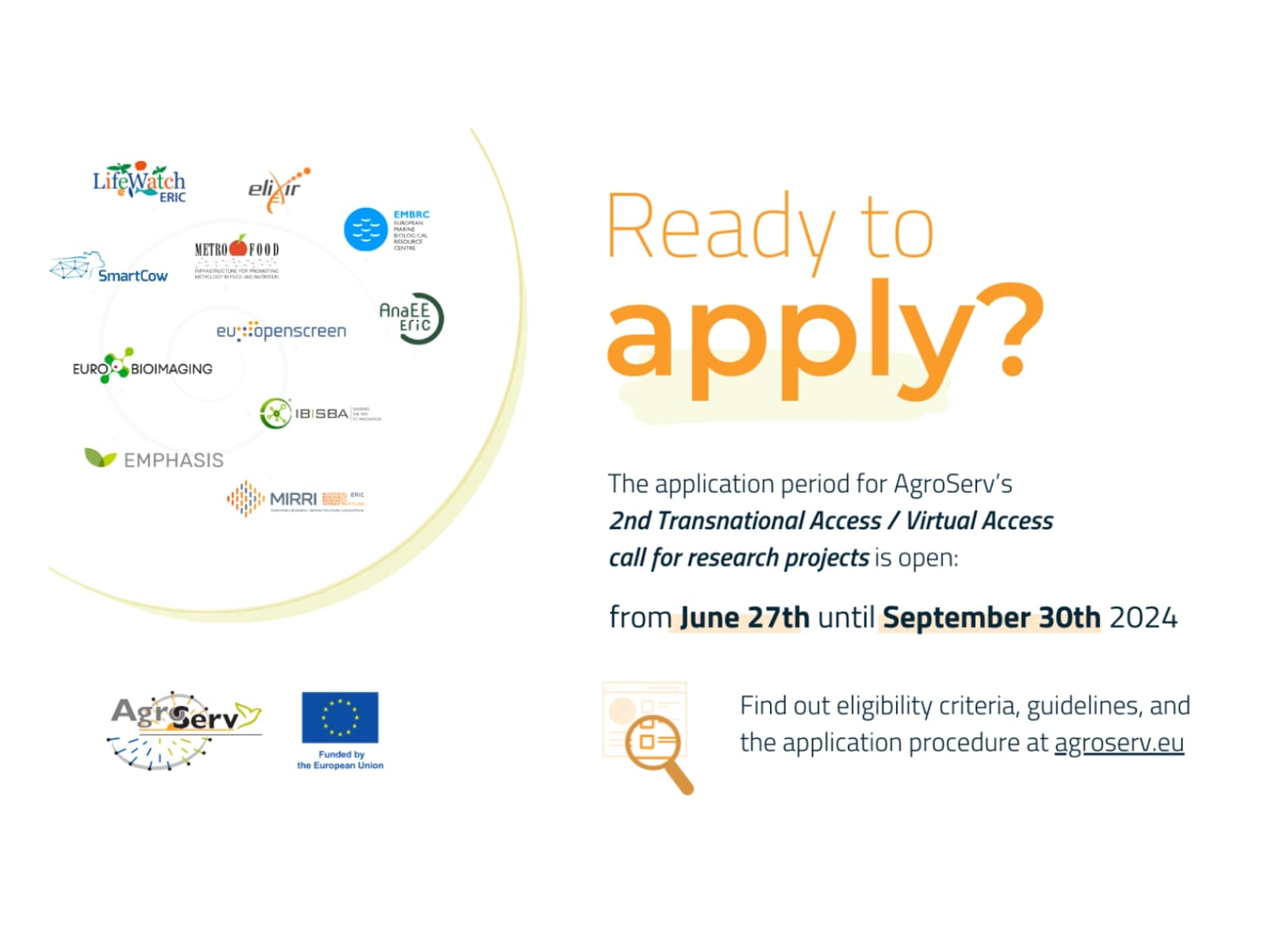
AgroServ’s Second Call for Proposals is Now Open!
This call invites researchers, farmers, biotechnologists, and entrepreneurs to explore innovative solutions that align with the principles of modern agroecology. AgroServ supports the cooperative use of resources offered by these research infrastructures, making it a unique platform for promoting sustainable agricultural practices.
For further details, including guidelines and instructions on submitting your research proposals, please visit our website:
If you have any questions, please contact:
Dr. Heba Ibrahim: agroserv-access@fz-juelich.de
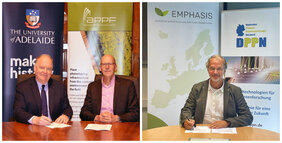
International collaboration targets global food challenges
Plant phenotyping is a growing field of plant science that specialises in capturing data via point sensors, imaging systems and remote sensing platforms, then utilising data management and analysis to more efficiently validate new traits and environmental dynamics.
The APPF and EMPHASIS are both world-leading infrastructure facilities enabling researchers to quantify and understand plant structure and function, which in turn helps accelerate the development of more resilient and higher yielding crops. Closer collaboration between the two organisations will lead to greater research efficiencies based on ‘standard’ profiles for experiment documentation and data, shared technical innovations, greater project cooperation and avoiding research duplication.
APPF is supported by the Australian Government’s National Collaborative Research Infrastructure Strategy (NCRIS) and hosted by the University of Adelaide.
University of Adelaide Deputy Vice Chancellor and Vice President (Research) Professor Anton Middelberg sees great value in the partnership. “Sharing knowledge is fundamental to progressing innovation in plant phenomics and this MOU has been drafted by both parties to establish the framework within which our cooperation can be developed,” he says. “We are looking forward to working together via virtual events, workshops and seminars.”
“The agreement also establishes joint principles for collaboration and agreed sets of standards that will benefit the plant science and plant phenotyping communities in Europe and Australia. It will broaden the scope of our research and create joint opportunities for education and outreach, project funding, and sharing phenotyping information that advances plant science at the University.”
APPF Chief Executive Director Richard Dickmann says the APPF is excited about working with its European equivalent. “The agreement recognises the world-class capabilities of the APPF and will have benefits for Australian farmers, regional communities and people choosing a career linked to agricultural research. We are now establishing a working committee to implement our pathway forwards,” he says.
EMPHASIS coordinator Professor Ulrich Schurr, director of Institute for Plant Sciences, Research Centre Jülich, says Australia and Europe have worked hand-in-hand to pioneer modern plant phenotyping over the last decade. “We are excited to further extend this very successful cooperation and strengthen the connection between plant phenotyping researchers from APPF with the European plant phenotyping community organised by EMPHASIS,” he says.
Dr Inmaculada Figueroa, Vice Chair of the European Strategy Forum on Research Infrastructures (ESFRI) is also positive about the new Memorandum of Understanding. “International cooperation in science and technology linking research infrastructures is an important part of addressing major global challenges such climate change, sustainable agriculture and food security,” she says. “The cooperation between APPF and EMPHASIS represents an important step to jointly and synergistically address these global challenges.”
About APPF and EMPHASIS
The Australian Plant Phenomics Facility, funded under NCRIS, is a distributed network of national research infrastructure platforms offering open access to plant phenomics technologies, tools and expertise. Current partners are The University of Adelaide and the Australian National University.
The European Infrastructure for Multi-scale Plant Phenomics and Simulation (EMPHASIS) is a distributed Research Infrastructure project of ESFRI Roadmap with the goal to develop and provide access to state-of-the-art phenotyping facilities and services addressing multi-scale phenotyping in different agro-climatic scenarios across Europe.
(Text: APPF/University of Adelaide)
ALL-Ready – The EU Agroecology Living Lab and Research Infrastructure Network
The network was officially launched in December 2021 with 15 members after a six-month selection and preparation process. Aiming for an open and dynamic network, four additional initiatives joined the network in November 2022, resulting in a total of 19 members. 11 members identify as LL, seven as RI and one (ACS) identifies as both a LL and RI.
A Danish funding programme, the Organic Research, Development and Demonstration Programme also joined the pilot network as an observer in order to learn from the members as they aim to fund and user-centered, LL-like research projects focusing on organic farming and food systems.
The membership of the network is truly diverse, representing all four European regions (Northern, Southern, Western, and Eastern Europe), with members from eight EU countries, the United Kingdom, Switzerland and Canada. The members also differ in terms of size and objective. Many have broad goals concerning agroecology, namely, to improve agronomic practices, agrotechnology across various agricultural sectors (arable farming, horticulture, etc.), while some have specific aims and focus on single areas such as the reduction of antimicrobials in animal husbandry or improving the uptake of digital tools in agroecology. Some of them are LLs certified by ENoLL, while the majority are open innovation structures representing national or territorial networks, LL-like projects, or experimental sites.
The members also differ regarding the geographic scope of their activities. Most RIs tend to have an international scope (ISF, LifeWatch ERIC, EMPHASIS), while there are some with a local (ZAPVS) or a regional focus (ReWet). Many member LLs operate on a national (PA4ALL, ÖMKi, IF, Carbonfarm, InoFA, ACS) or regional level (LLAEBIO, PFN Hessen, Guadalinfo). The members also represent diverse levels of experience, from beginners (fewer than one or two years) (Occitanum, Hessen) to mature two-five years) (LLAEBIO, InoFA, PA4ALL, ISF, LifeWatch-ERIC, ROADMAP, EMPHASIS) and to very experienced (more than five years) (ÖMKi, OasYs, ReWet, Biobase, ZAPVS, IF, Carbonfarm, FiBL, ACS).
Network members also differ from small to large-scale initiatives regarding the number of users they work with. In agroecology LLs, users are usually farmers, but may also be consumers or other takeholders in the agri-food value chain. In agroecology RIs, users are almost always researchers, and only occasionally farmers, advisors, or citizens. The majority of the members cooperate with small (below 50 users) (PA4ALL, LifeWatch-ERIC, OasYs, Carbonfarm, PFN Hessen, EMPHASIS) or medium cale (50 – 200 users) (LLAEBIO, ÖMKi, ROADMAP, Occitanum, Biobase, InoFA, FiBL, Guadalinfo) user communities and only a few of them have more than 200 users (ISF, ReWet, ZAPVS, IF).
The pilot network was also designed to allow real-life experimentation on the structuring and unctioning of the future European network of agroecology LLs and RIs based on co-creation and participatory methods, and the lessons learned can directly inform the setting up of the future network and the Agroecology Partnership.
This project has received funding from the European Union’s Horizon 2020 research and innovation programme under grant agreement No 101000349 (ALL-Ready).
ALL_Ready 2023 EN 2023-11 online.pdf
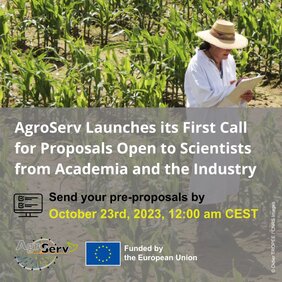
AgroServ - First Call for Proposals Open to Scientists from Academia and the Industry
The following scientific domains are covered:
- Agricultural Sciences
- Natural Sciences
- Biological Sciences
- Material Sciences
- Engineering
- Chemistry
- Medical and Health Sciences
- Earth and Environmental Sciences
- Information Science and Technology
- Humanities and Social Sciences.
AgroServ enables access to 143 research installations across Europe for researchers from academia and the industry (physical, remote and virtual access). The installations can be used for experiments with scientific or scientific-technological objectives to answer basic and applied questions related to sustainable and resilient agriculture and agroecological transition.
Access is granted on the basis of scientific excellence to ensure feasibility of the projects and their scientific quality. The application to access our research facilities is a two-step process.
Learn more about the application procedure and send your pre-proposals before October 23rd, 2023, 12:00 am CEST here.
IPPS Research Topic in frontiers
This Research Topic aims to collect selected contributions from attendees and members of the research community of IPPS 2022, the 7th International Plant Phenotyping Symposium, which was held in Wageningen, Netherlands (September 26-30 2022). Spontaneous submissions are also welcome. Submissions will be open following the conference.
Plants are a vital aspect of and a venue for addressing the challenges facing our planet. The need for renewable energy sources and a reliable food/feed supply as well as ways to manage resource and materials scarcity and climate change are among the challenges that we can address with plants. Integrating plant systems approaches, from molecular to organismal to field applications, is necessary to develop sustainable production with higher yields using limited land, water, and nutrients and to improve the characteristics required for the traditional and novel use of plants for the future.
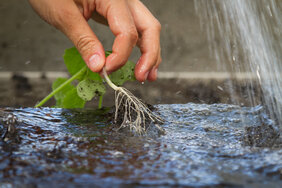
Call for contributions to a special Issue: Phenotyping functional traits in plants
With this Special Issue we invite contribution that focus on the use of phenotyping approaches for the quantification of physiological traits under biotic and abiotic stress of crops under controlled and field conditions with the goal to understand basic plant environment interaction and translate this understanding into application in breeding or agronomy scenarios, as one of the key objectives on the way towards sustainable agriculture.
Submission deadline: 31 July 2023
Guest Editors
Forschungszentrum Jülich GmbH
Institut für Bio- und Geowissenschaften (IBG)/ Pflanzenwissenschaften (IBG-2)
Prof. Dr. Ulrich Schurr
Prof. Dr. Uwe Rascher
Dr. Sven Fahrner
Dr. Roland Pieruschka
Useful Links
Call-for-paper
Submission website
Guide for authors

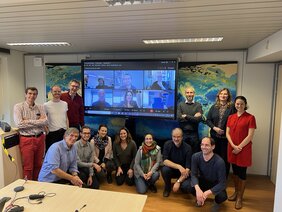
EMPHASIS Implementation Project „EMPHASIS-GO” has started
To that end, EMPHASIS-GO will (1) develop and deploy services, (2) implement the legal, financial and organisational framework and (3) consolidate the business plan for the Operational Phase.
EMPHASIS-GO brings together 13 leading plant phenotyping institutions from eleven countries. It is a 36 months project funded with ~ 1.3 million euros by the European Union (Grant agreement ID: 101079772)