

Phenet
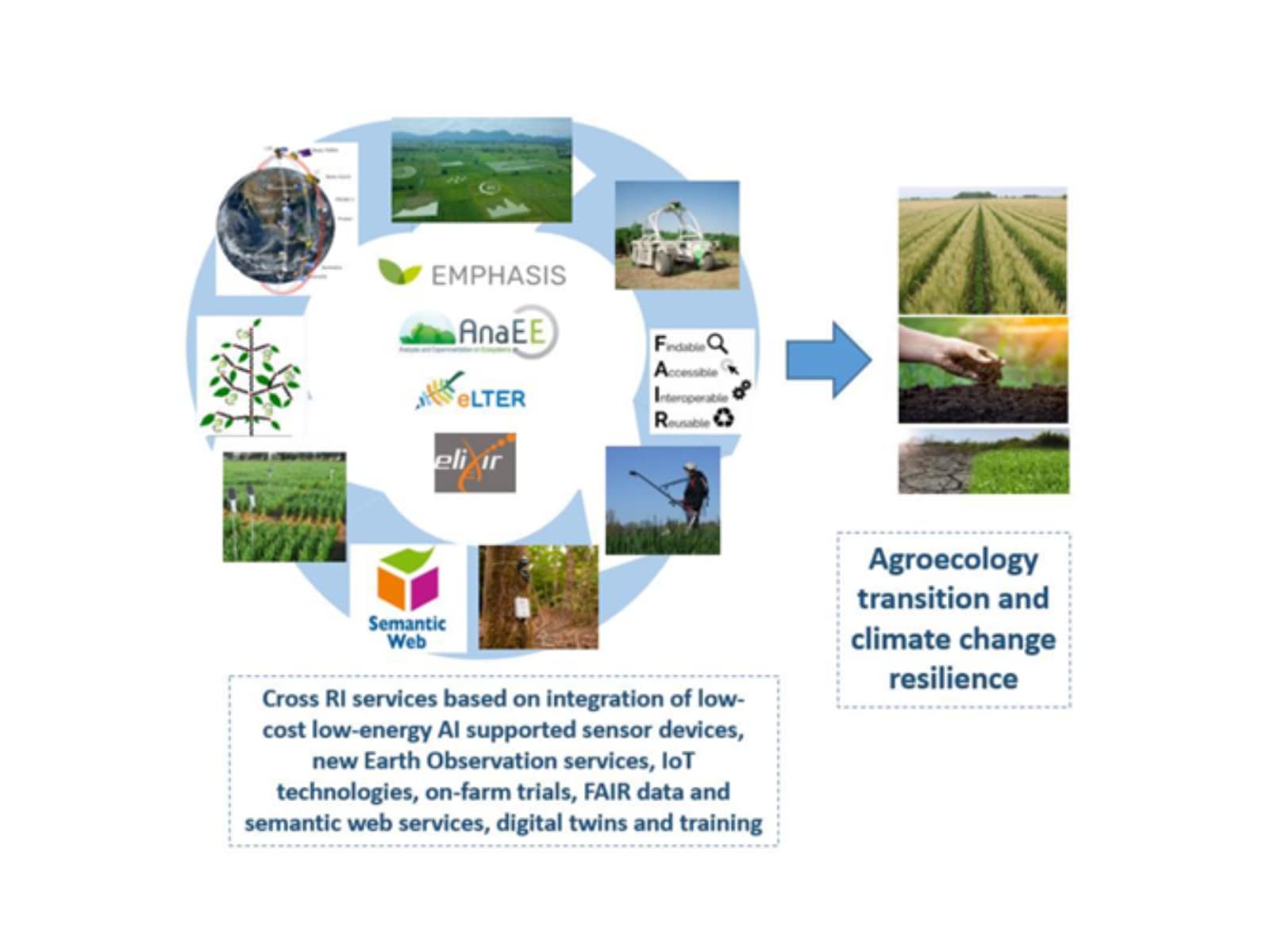
In PHENET, the European Research Infrastructures (RI) on plant phenotyping (EMPHASIS), ecosystems experimentation (AnaEE), long-term observation (eLTER) and data management and bioinformatics (ELIXIR) will join their forces to co-develop, with a diversity of innovative companies, new tools and methods – meant to contribute to new RI services – for the identification of future-proofed combinations of species, genotypes and management practices in front of the most likely climatic scenarios across Europe.
Ambitioning to go beyond current highly instrumented but often spatially and temporally limited RI installations, PHENET derived services will allow wide access to enlarged sources of in-situ phenotypic and environmental data thanks to (i) new AI-based multi (agroecology-related) traits multi-sensors devices (ii) to unleashed access to high resolution Earth Observation data connected to ground based data, (iii) FAIR data support for connection with (iv) new generation of predictive modelling solutions encompassing AI and digital twins. Developments will be challenged by and implemented in a series of eight Use Cases covering a large range of agroecosystems but also of ecosystems to demonstrate portability of solutions. Several of these Use Cases will mobilize on-farm data.
A large effort will be devoted to training RI staff and beyond through a sustained collection of training material fed by experts. Outreaching activities will aim at enlarging the range of RI users. PHENET will not only strengthen RI but will also have major impact on the development of innovative companies on phenotyping, envirotyping and precision agriculture as well as on the emergence of climate smart crop varieties and innovative practices fitted to climate change and agroecological transition.

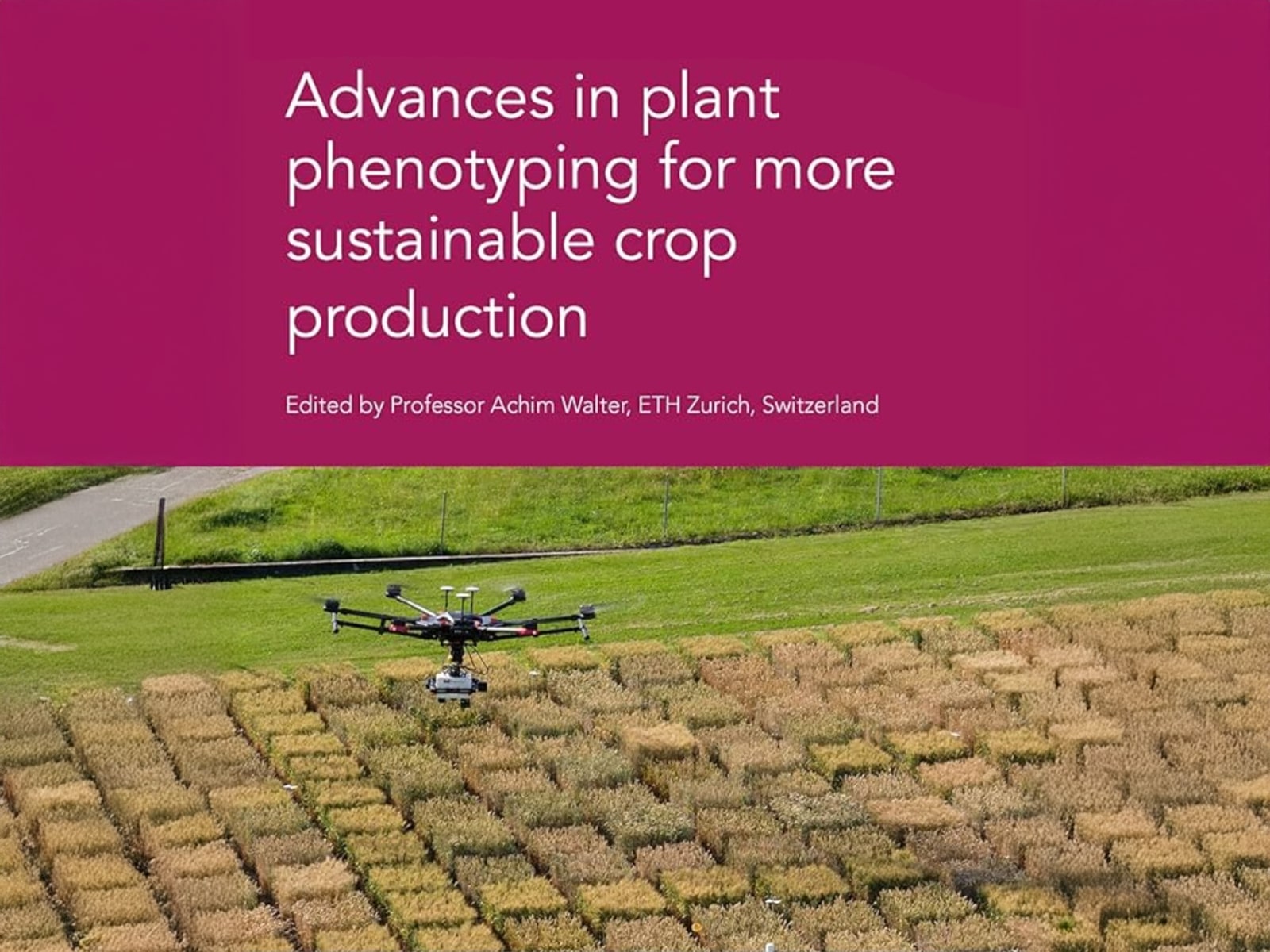
New book: Advances in plant phenotyping for more sustainable crop production
This new title also details the use of plant phenotyping to analyse traits such as crop root functionality, yield performance and disease resistance.
Find out more about the new title here.
*Special Offer*
Receive 20% off your order of the book using code EMP20 via the BDS Website. Please note that this discount code expires 31st July 2022.

EMPHASIS contributes to European project AI4Life on Artificial Intelligence
Furthermore, even though modern AI-based methods typically generalize well to unseen data, no standard exists to enable sharing and fine-tuning of pre-trained models between different analysis tools. Existing user-facing platforms operate entirely independently from each other, often failing to comply with FAIR data and Open Science standards. The field of AI and ML is developing at a staggering pace, making it impossible for the non-specialist to stay up to date.
To enable the life science communities to benefit from AI/ML-powered image analysis methods, AI4LIFE will build bridges, providing urgently needed services on the common European research infrastructures. The project builds an open, accessible, community-driven repository of FAIR pre-trained AI models and develops services to deliver these models to life scientists, including those without substantial computational expertise. Direct support and ample training activities will prepare life scientists for responsible use of AI methods, while contributor services and open standards will drive community contributions of new models and interoperability between analysis tools. Open calls and public challenges will provide state-of-the-art solutions to yet unsolved image analysis problems in the life sciences.
The consortium brings together AI/ML researchers, developers of popular open source image analysis tools, providers of European-scale storage and compute services and European life sciences Research Infrastructures — all united behind the common goal to enable life scientists to fully benefit from the untapped but potentially tremendous power of AI-based analysis methods.
EMPHASIS contributes to European project AgroServ on Agroecology
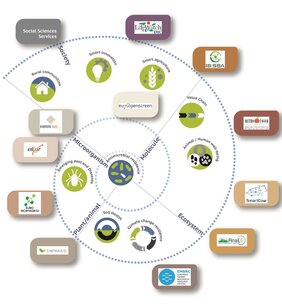
AgroServ, thanks to a large consortium of recognized European Research Infrastructures, features a vast offer of services at all scales, from the molecule, to the organism, to the ecosystem, and to the society. AgroServ goes beyond the state-of-the-art because it will allow users access, for the first time, to make use of a consistent, integrated, and customized offer of services from several RIs spanning all relevant disciplines: they will bring together several types of expertise, disciplines and technologies, integrating competences from chemists, biologists, agronomists, ecologists, bioengineers, analysts, sociologists, economists.
The transdisciplinary offer of services will have a high impact on the future of the food system, preserving biodiversity and reducing the impact of agriculture on climate. The consortium will work closely with partners from the society, farmers, industry, citizens and policy makers, through living labs and towards the establishment of evidence-based policy, and codeveloped practices in agriculture. By delivering a pan-European and inter/multidisciplinary data ecosystem, and providing state-of-the art services on agroecosystems, the project will society long-term capacity to respond to global challenges in the agriculture sector. It will also provide evidence-based policy making for a resilient and sustainable agricultural system and enable new discoveries and knowledge breakthroughs in the field of agroecology. Through user engagement and Living Lab activities, it will develop the agroecology research community, encourage cross-fertilisation and enable a wider sharing of knowledge.
The project is expected to start by the end of 2022.
Opinion Paper: EU Consortium calls for "Designing the Crops for the Future; The CropBooster Program"
Abstract
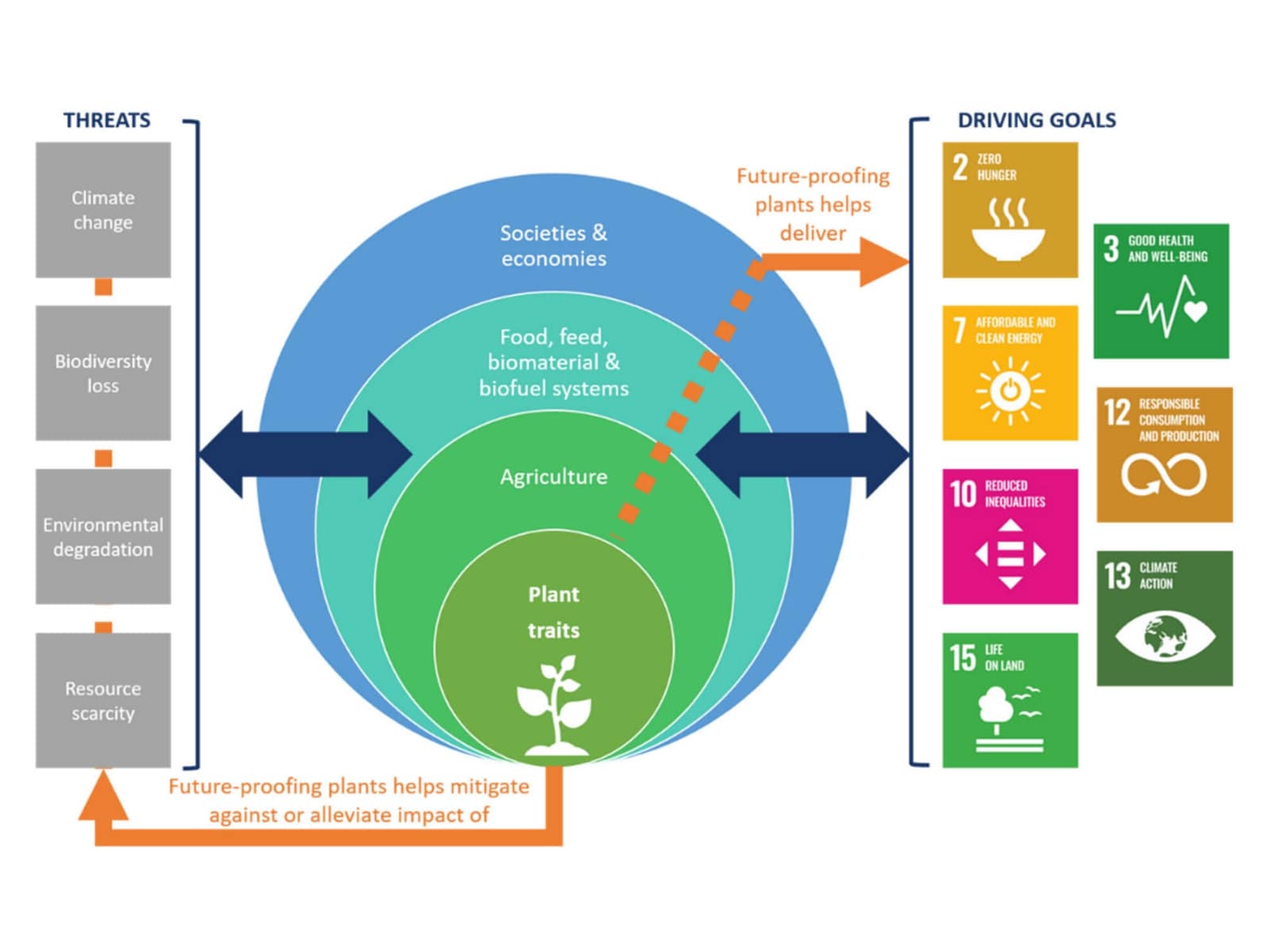
The realization of the full objectives of international policies targeting global food security and climate change mitigation, including the United Nation’s Sustainable Development Goals, the Paris Climate Agreement COP21 and the European Green Deal, requires that we (i) sustainably increase the yield, nutritional quality and biodiversity of major crop species, (ii) select climate-ready crops that are adapted to future weather dynamic and (iii) increase the resource use efficiency of crops for sustainably preserving natural resources. Ultimately, the grand challenge to be met by agriculture is to sustainably provide access to sufficient, nutritious and diverse food to a worldwide growing population, and to support the circular bio-based economy. Future-proofing our crops is an urgent issue and a challenging goal, involving a diversity of crop species in differing agricultural regimes and under multiple environmental drivers, providing versatile crop-breeding solutions within wider socio-economic-ecological systems. This goal can only be realized by a large-scale, international research cooperation. We call for international action and propose a pan-European research initiative, the CropBooster Program, to mobilize the European plant research community and interconnect it with the interdisciplinary expertise necessary to face the challenge. Link to paper
Harbinson et. al. (2021) Designing the Crops for the Future; The CropBooster Program (PDF)
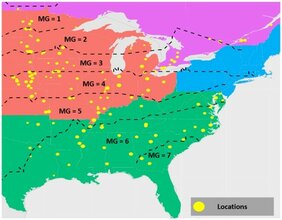
MLCAS2021 launches Crop Yield Prediction Challenge
This challenge is part of the MLCAS2021 workshop. Accurate prediction of crop yield can improve agricultural breeding and provide monitoring across diverse climatic conditions. This can protect crop production from climatic challenges. To predict crop yield, it is important to integrate weather information across the crop growing season for multiple genotypes. Unraveling the importance of different weather parameters for crop yield prediction would be a substantial step forward in understanding the impact of climate change on a variety’s plasticity.
Our dataset assimilates and utilizes complex data for crop yield prediction. This dataset can provide a significant advancement in the domain of yield prediction – previous works have mostly relied on a small subset of factors, therefore failing to capture the complexity of biological interactions and more site-specific weather variable complexities. Some approaches have been based on meteorological data (maximum daily temperature, minimum daily temperature) without field-scale farming data. It is important to develop models which can capture temporal correlations and our dataset can enable that.
New Special Issue in Plant Phenomics
Submission Deadline: June 30, 2023
Scope
Plant phenotyping is widely known as the basis of plant phenomics, which is the bridge as well as a bottleneck for studying the interactions between genomics and the environment. Recently, time-series phenotyping is gaining more and more attention due to its potential in revealing key trait differences in critical growth periods as well as a way to access more functional traits. Meanwhile, proximal sensing and image analysis have brought a renaissance in plant phenotyping. It is possible to combine multi-source proximal sensing techniques, such as RGB, light detection and ranging (LiDAR), multi/hyperspectral, solar-induced fluorescence (SIF), and thermal sensors, to better describe plant growth and development. Image analysis, especially computer vision and data-driven deep learning methods, can make phenotyping more objective, accurate, and efficient than traditional field measurement. Therefore, combining advanced proximal sensing and image analysis will provide a comprehensive study of time-series plant phenotyping.
Given the above context, this special issue invites submissions broadly contributing to time-series plant phenotyping. Specific topics of interest include:
- Data fusion of multi-source proximal sensing imagery to provide consistent spatial and temporal support.
- Methods in time-series phenotyping including object detection, tracking, trait extraction, etc.
- Application of time-series imagery to plant breeding, cultivation, and management.
Articles must be original research, not published elsewhere. All articles will go through a rigorous peer-review process as per the journal norms. Review articles around the topics are also encouraged. Articles must follow the instructions for authors at https://spj.sciencemag.org/journals/plantphenomics/guidelines/.
Guest Editors
Shichao Jin, Nanjing Agricultural University
Yanjun Su, Institute of Botany, Chinese Academy of Sciences
Changying Li, University of Georgia
Qinghua Guo, Peking University
Submission Deadline
June 30, 2023. All papers will be published online after acceptance.
Submission Instructions
Please submit the full manuscript to Plant Phenomics via our online submission system. When submitting, please indicate in your cover letter that your submission is intended for consideration for the special issue, Advances in Proximal Sensing and Image Analysis for Time-Series Phenotyping. For inquiries, please contact Dr. Shichao Jin (jschaon@njau.edu.cn).
Greece: Intelligent system to monitor health of olive groves
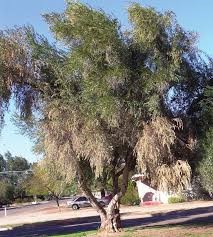
Olives and olive oil are important for the European Union, in particular those Member States with Mediterranean coastlines. Spain alone produces 36% of the world’s olive oil, and the sector is a major contributor to the economies of Greece, Italy, and Portugal, and is also important to Cyprus, France, and Slovenia. Additionally, Italy and Spain are the largest consumers of olive oil in the EU, with an annual consumption of around 500,000 tons each, while Greece has the biggest EU consumption per capita, with around 12 kg per person per year. In total, the EU accounts for around 53% of world consumption. In terms of trade, the EU represents roughly 65% of world exports of olive oil. But the economic benefits of olive oil production, and of the production of table olives, come at a cost. Olive growing has become more intensive over the last three decades and is using an increasing amount of agricultural land. This intensification and expansion in the cultivation of olives have contributed to the significant spread and amplified the consequences of many diseases affecting olive trees. Among those, the most important fungal problem is verticillium wilt. The solutions available to tackle Verticillium’s effects require the accurate classification of trees in the early stages of infestation—a task that is impractical with traditional means but also very difficult, as early stages are almost impossible to distinguish by visual inspection.
All the above constitute the underlying context of MyOliveGroveCoach project, which utilizes multispectral imaging from unmanned aerial vehicles to develop an olive grove monitoring system based on the autonomous and automatic processing of the multispectral images using computer vision and machine learning techniques. The goal of the system is to monitor and assess the health of olive groves andprovide novel solutions for the early detection of Verticillium wilt and its spread. Olive cultivation in Greece represents a large percentage of the total agricultural land and a very large percentage of agricultural land that would be, considering territorial characteristics such as low fertility and sloping, difficult or economically impractical to exploit with other crops. Therefore, the effects of Verticillium are quite severe also from an economic point of view since it contributes to a serious reduction in olive
productivity, plant capital destruction and subsequently leads to derivative unwanted effects such as increased soil degradation. Verticillium wilt causes a gradual malfunction and eventually a complete blockage of the vessels of the tree, in part or in whole, interrupting the movement of water from the roots to the leaves, resulting in interruption of the water supply in the affected part of the tree. This reduction in water supply leads to nutritional deficiencies and even starvation of the branches. Before the complete blockage and total necrosis of the affected tissue associated with the part of the root that has been infected, there precedes a stage of temporary water stress, a reversible stress, which can be mainly attributed to the closure of the stomata of the affected plant tissue [2], stunting, chlorosis or yellowing of the leaves, necrosis or tissue death, and defoliation. Internal vascular tissue discoloration might be visible when the stem is cut.[1] In Verticillium, the signs and effects will often only be on the lower or outer parts of plants or will be localized to only a few branches of a tree. The severity of the infection plays a large role in how severe the signs are and how quickly they develop.
In the preliminary stage of early wilt infection, the natural process of photosynthesis is impaired, since the leaf pigments that are responsible for the canopy photosynthetic activity (mainly chlorophyll) are unable to function properly [3]. This impediment of the photosynthetic activity leads to a subsequent degradation of the canopy pigment percentage which results in a reduction of plant canopy reflectance in the Near Infrared wavelengths. As the infection progresses and because of the slow degradation of chlorophyll in the canopy the reflectance in the Green wavelengths (640nm) is also affected leading to light-green discoloration of the leaves; a discoloration that even in this stage of verticillium infection is very subtle and very difficult to detect with the naked eye, especially in there where photosynthetic activity has been hampered but the percentage of chlorophyll pigments in the canopy is still adequate for a functional photosynthetic activity.
Thermal and multispectral surveying has shown high correlations of leaves’ spectral characteristics with the degree of infestation, as measured in the 11 point [4]. On this basis, using Remote Sensing technologies enabled by the advent of small format high resolution multispectral sensors carried by unmanned aerial vehicles with autonomous mission capabilities. The team comprised of Kostas Blekos, Anastasios Tsakas, Aris Lalos, Ioannis Evdokidis, Dimitris Alexandropoulos, Christos Alexakos, Athanasios Kalogeras (Industrial Systems Institute, Athena Research Center, Patras, Greece), Sofoklis Katakis, Andreas Makedonas, Christos Theoharatos (Irida Labs S.A., Patras, Greece), Christos Xouris (Gaia Robotics S.A., Patras, Greece) created the platform “My Olive Grove Coach” (MyOGC). The main goal of MyOGC is the development of an intelligent system that will monitor olive groves and support farmers in the detection and treatment of Verticillium, using multispectral sensors and spectrophotometers. All raw data collected by the dedicated multispectral sensors are algorithmically processed and augmented by machine learning techniques. Finally, the end-results are visualized in a user friendly way so that producers and agronomists have access to reliable, actionable and customizable data, according to the principles of human-centered design.
With MyOGC it will be possible to (a) collect actionable data on the progress and spread of tree infestation; (b) quickly detect the problem using innovative signal processing methods and multispectral imaging and computer vision, in combination with machine learning techniques, thereby providing accurate spatial identification of affected trees; (c) guide the producers/agronomists when required, with a user-friendly communication and decision-making support system, with maps of quantitative and qualitative characteristics of the grove, that will help them optimize their olive management practices thus leading to (d) better yield quantity and quality while achieving a lesser environmental footprint of agricultural practices.
References
[1] Herder, M.D.; Moreno, G.; Mosquera-Losada, R.; Palma, J.; Sidopoulou, A.; Santiago Freijanes, J.J.; Crous-Duran, J.; Paulo, J.A.; Tomé, M.; Pantera, A.; et al. Current Extent and Trends of Agroforestry in the EU27. Available online: www.agforward. eu/index.php/en/current-extent-and-trends-of-agroforestry-in-the-eu27.html (accessed on 30 November 2020).
[2] Calderón, R.; Navas-Cortés, J.A.; Lucena, C.; Zarco-Tejada, P.J. High-resolution airborne hyperspectral and thermal imagery for early detection of Verticillium wilt of olive using fluorescence, temperature and narrow-band spectral indices. Remote Sens. Environ. 2013, 139, 231–245. [CrossRef]
[3] Fradin, E.F.; Thomma, B.P. Physiology and molecular aspects of Verticillium wilt diseases caused by V. dahliae and V. albo-atrum. Mol. Plant Pathol. 2006, 7, 71–86. [CrossRef] [PubMed]
[4] Zartaloudis, Z.; Iatrou, M.; Savvidis, G.; Savvidis, K.; Glavenas, D.; Theodoridou, S.; Kalogeropoulos, K.; Kyparissi, S. A new 11-point calibration scale of Verticillium wilt of olive verified by thermal remote sensing and plant analysis. In Proceedings of the 17th PanHellenic Plant Pathology Conference, Volos, Greece, 13–18 October 2014
Austria: New high-throughput phenotyping platform at Vienna BioCenter Core Facilities (VBCF)
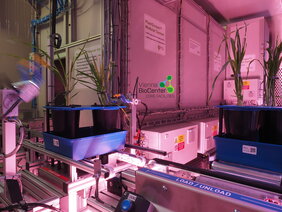
Within the planned infrastructure, plants are transported on conveyor belts from the growth area to the imaging cabinets equipped with state-of-the-art sensors. The imaging units are physically separated from the growth area (two individually controlled phytotrons) facilitating the parallelization of measurements via a sample loop and thus improving the throughput, flexibility and sensor utilization.
The PHENOPlant project evolved out of the Austrian Plant Phenotyping Network (APPN.at) initiative, was funded by the Austrian Research Promotion Agency (FFG) and built by PSI (Photon System Instruments).
The infrastructure is operated by the Plant Sciences Facility of the Vienna BioCenter Core Facilities GmbH and available in a fee4service mode to national and international user from academia and industry.
Specifications:
Environment:
- Temperature: 0°C-40°C
- Humidity: 40-80% rel.hum.
- Light: adjustable LED light spectrum, up to 1000 µmol m-2 s-1
- CO2: ambient – 2000 ppm
- Highly controlled environments & dynamic simulations
Capacity:
Designed for crop plants up to 100cm height (incl. pot), 50cm width and for Arabidopsis
- 200 x 5L pots or
- 400 x 3L pots or
- 800 x 2L pots or
- 4000 x 250mL pots (Arabidopsis).
Sensors:
- RGB (top- & side-view)
- 3D laser scan
- PAM chlorophyll fluorescence
- LWIR thermal imaging
- Hyperspectral imaging (VNIR and SVIR)
- Automatedweighing & watering stations (two tanks each).
- Mobile weather stations for live dynamic environmental simulation
Contact:
Jakub Jez
Head, Plant Sciences Facility
Vienna BioCenter Core Facilities Gmbh (VBCF)
Dr. Bohr Gasse 3
1030 Vienna, Austria
https://www.viennabiocenter.org/vbcf/plant-sciences/phenoplant/
https://twitter.com/VBCF_PlantS
https://www.linkedin.com/in/jezjakub/
https://www.plant-phenotyping.org/db_infrastructure#/tool/156/
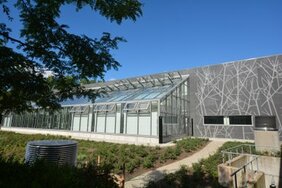
Sweden: A virtual tour of the Biotron at SLU Alnarp
The tour was held over zoom by Ramesh Vetukuri, who is the Biotron Development leader and Julia Nilsson who is a Horticultural Engineer at the Cultivation Unit. They guided the approximately 35 participants through the facility and showed the various growth chambers. After the presentation there was a lively session of questions and answers. The whole presentation was recorded and can be seen here.