


RI-VIS publishes three white papers on international cooperation between research infrastructures
International cooperation on the level of research infrastructures is key to addressing major global challenges including climate change, infectious disease, food security and natural disasters. The EU-funded RI-VIS project, a consortium of 13 partners from European research infrastructures, aims to increase the visibility of European research infrastructures and raise awareness in new communities beyond Europe. As part of this goal, RI-VIS has just published three white papers providing region-specific recommendations to funders, policy makers and research infrastructure managers on how to increase international collaboration among research infrastructures. Each white paper focuses on specific regions: (1) African-European, (2) Latin American-European and (3) Australian-European cooperation, respectively.
The papers collate the insights of a total of 21 experts from research infrastructures, policy-makers and relevant governmental institutions from different regions collected through in-depth interviews. Each paper is structured into sections that cover examples of successful collaboration, lessons learned and possible challenges as well as a summary of key recommendations.
Even though many of the recommendations given are specific to the respective regions, some prominent themes emerge in all three white papers. These include issues such as funding, the importance of aligning scientific priorities and mutual benefits. Other key recommendations cover collaboration frameworks, global challenges, access, personal relationships, staff recognition and communication platforms.

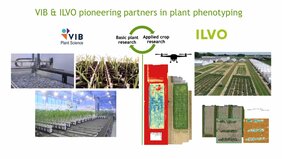
Belgium: VIB and ILVO jointly obtain regional funding to establish the ‘EMPHASIS-Belgium’ consortium as national node of EMPHASIS
Continued improvements in crop performance are needed to cope with climate change and to keep pace with population growth. To tackle these global challenges, novel approaches are required to identify superior crop varieties and to explain the genetics of agriculturally important traits. Synergies between (Belgian) phenotyping installations, coordination of phenotyping initiatives and training, and access to state-of-the-art phenotyping platforms and data are needed to drive world-leading plant and agricultural sciences.
The EMPHASIS-Belgium consortium has received funding of Research Foundation Flanders (FWO) within the International Research Infrastructure (IRI) programme, a high-level funding programme for large-scale international investments and linked with the Flanders Department of Economy, Science and Innovation (EWI). This will enable EMPHASIS-Belgium to play a pivotal role to facilitate multiple services such as access to its state-of-the-art controlled condition and highly equipped field phenotyping facilities, data and modelling tools and innovation, to the benefit the Flemish, Belgian and European plant phenotyping community (i.e. plant phenotyping institutes and companies). The national node will (i) coordinate the consortium and further development of EMPHASIS-Belgium and integrate the Belgian phenotyping community – Belgian Plant Phenotyping Network (BPPN) – in international initiatives of EMPHASIS; (ii) ensure communication and interaction between project partners; (iii) facilitate services of the national node, including networking; (iv) ensure access to specific platforms and data of field (ILVO) and controlled condition phenomics (VIB).
Within the consortium, VIB Center for Plant System Biology (PSB), will take the lead. VIB is one of the world’s best performing plant research centres and has extensive expertise in plant phenotyping. The centre owns multiple state-of-the-art, automated and high-throughput, controlled conditions plant phenotyping installations, and heavily invested in the development of data management software for phenotyping infrastructure called PIPPA (PSB Interface for Plant Phenotype Analysis). PIPPA is a central user interface and database for experimental setups in plant phenotyping installations and (meta)data analysis, and will be linked to the EMPHASIS data layer, ones established, to enable open access to its data. Within EMPHASIS-Belgium, VIB will provide access to multiple platforms for controlled environment phenotyping, including an exchangeable sensor portfolio that will provide high levels of flexibility to meet the scientific requirements for a broad range of users.
The ILVO-Plant Sciences (ILVO, ilvo.vlaanderen.be) performs research from agricultural soil to product. ILVO focusses on sustainable plant production with special focus on soil management while reducing nutrient losses and increasing soil organic carbon, and the yield and quality of the primary product. ILVO has more than 80 years of proven records in plant breeding, with extensive expertise on biotic and abiotic stress research and has built significant experience related to field phenotyping in the context of breeding and crop management. ILVO develops tools for close remote sensing using different sensors mounted on UAVs for a broad range of crops, and has experience in gathering and analysing phenotypic data in high spatio-temporal resolution of large trials. Up till now, phenotyping activities under field conditions focused on above-ground plant parts, but in this consortium ILVO will develop a fully operational field-scale automated phenotyping infrastructure enabling the monitoring of root function and entire canopy behaviour at high spatio-temporal resolution, coupled with abilities to impose drought. Combining below- and aboveground sensing techniques will allow the establishment of a ‘systems approach’ to the dynamics of plant adaptation to the future climate under (real) field conditions.
For further information: Merlijn Morisse (merlijn.morisse@psb.vib-ugent.be)
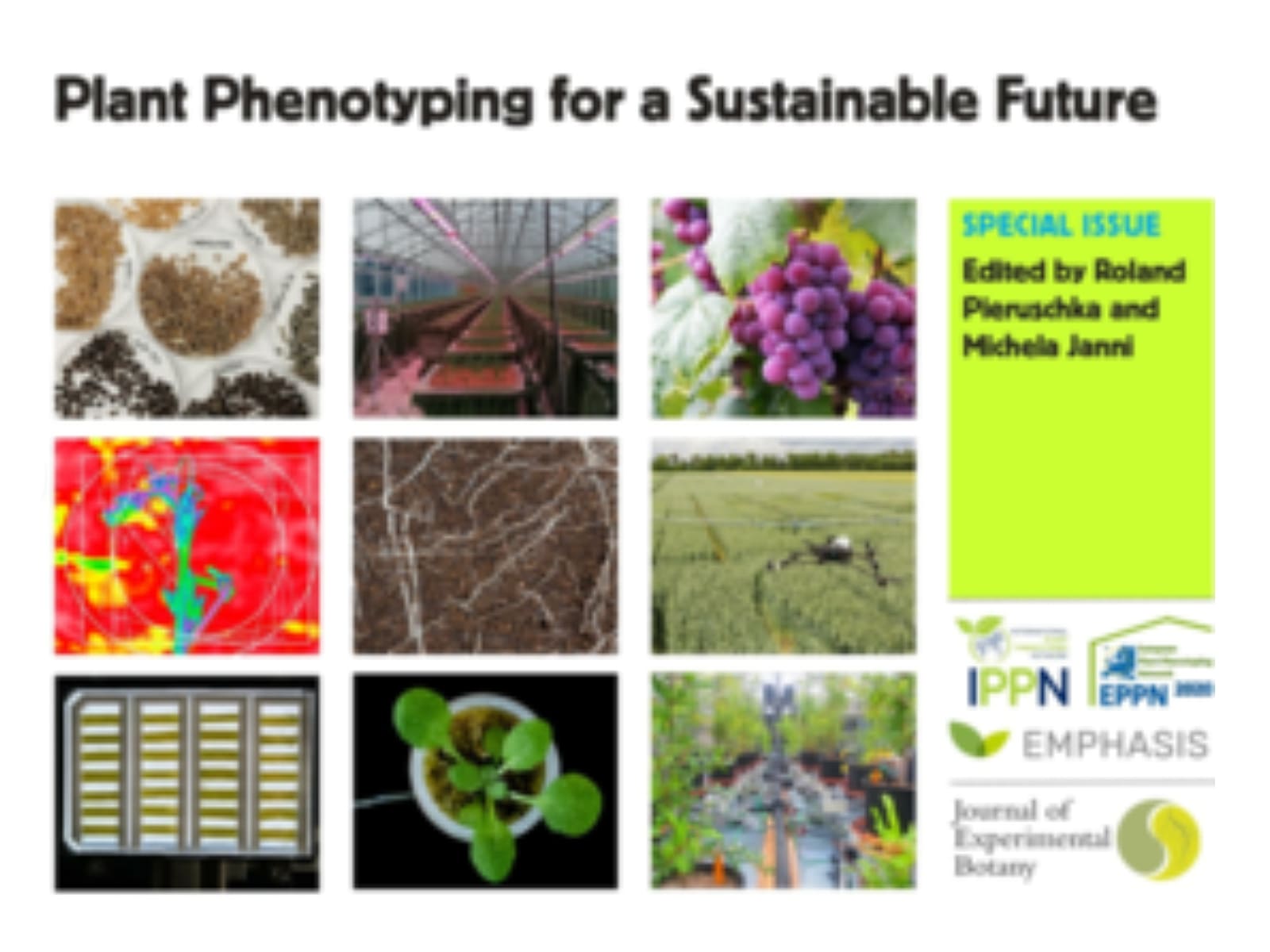
Plant Phenotyping for a Sustainable Future
Edited by Roland Pieruschka and Michela Janni
The invited papers in this special issue – published in association with the Society of Experimental Biology virtual conference (SEB2021), the International Plant Phenotyping Network, the EU project EPPN2020, and the plant phenotyping research infrastructure EMPHASIS – focus on plant phenotyping as the key tool for understanding plant-environment interactions. The collected reviews will explore how this understanding translates into improving plant and crop productivity, quality, and tolerance to biotic and abiotic stress, including cross links to molecular biology, plant breeding, genetics and genomics, and bioinformatics.
Darwin Review
Bettina Berger, Patompong Saengwilai, Michael Selvaraj, Carolyn Lowrenze Dill, Alexander Buksch The state of global community
Reviews
Eva Rosenqvist, Carl-Otto Ottosen Phenotyping using photosynthetic processes
Kioumars Ghamkhar, Robert Koller, Uli Schurr Phenomics for genebank material and seeds
Ankica Kondić-Špika Plant phenotyping as a tool in creating climate resilient crops in Pannonian region
Mahlein A-K, Schaaf G, Lobet G, Vanderborght J, Bauckhage C, Kersting K, Gall J Identification and interpretation of crop features from phenomic data by machine learning
Katja Herzog, Anna Kicherer, Reinhard Töpfer Phenotyping in Grapevine – Perspectives for perennials
Patrick Langan, Villő Bernard, Joey Henchy, Nadia Al-Tamimi, Sónia Negrão Phenotyping for waterlogging tolerance: current trends and future prospects
Gordon Wellman, Christian Zörb, Sandra M. Schmöckel Phenotyping of Traits Related to Salinity Tolerance
Lukáš Spíchal, Nuria De Diego Phenotyping approaches in biostimulant research and development
Boris Rewald, Gernot Bodner Phenotype this! Established and emerging root phenotyping techniques from shovelomics to hyperspectral imaging, root counting to mechanistic modelling
Erik Alexandersson, Thomas Roitsch, Kristiina Himanen Functional phenomics to understand and improve crop resilience in the Nordic countries within climate change scenarios
Invitation to submit
We welcome contributions to this special issue. If you would like to submit a paper (either research or review), please email a title and brief outline for the consideration of the editors. All papers are peer reviewed to the usual standards and must fit within the scope of the journal. The deadline for submissions is 31 October 2021
Contact
JXB Editorial Office, c/o North Campus Academic Porters, County College, Lancaster University, LA1 4YE, United Kingdom • +44 (0)1524 592715 • j.exp.bot@lancaster.ac.uk • @JXBot • academic.oup.com/jxb
Images courtesy of Marina Tikhonova, Andreas Eckert, Luiz M. Santos (Pexels), Sudip Maiti, Ralf-Uwe Limbach (FZJ), Ulrike Beukert, Michiel Huybrechts, Giovanni Rallo (EMPHASIS Photo Competition 2020).
RI-VIS Publishes White Paper on African-European Research Infrastructure Cooperation
The White Paper provides recommendations on how to increase collaboration between European and African research infrastructures and is targeted at funders, policy makers and research infrastructure managers. It collates the insights of experts from both the research infrastructures and the policy side into sections that cover examples of successful collaboration, lessons learned and possible bottlenecks.
The key recommendations cover themes such as the framework of collaborations, global challenges, co-creation based on needs, access, funding and best practices.
The EU-funded RI-VIS project, a consortium of 13 partners from European research infrastructures, aims to increase the visibility of research infrastructures and raise awareness of European research infrastructures to new communities beyond Europe.
What kind of bioinformatics do plant scientists need?
de.NBI provides bioinformatics services to users in life sciences research and biomedicine in Germany and Europe. More information about de.NBI can be found here.
Special Issue: "From Phenotyping to Phenomics—Techniques for Exploring Plant Traits and Diversity"
IPPN member AgResearch (New Zealand) kicks-off new Special Issue in “plants”. This Special Issue aims to bring together a range of research papers that cover plant phenotyping at large-scale from hundreds of genotypes using simple and repeatable technology to small-scale using high-tech and accurate methods and anything in between.
Special Issue Editor
- Dr. Kioumars Ghamkhar Website
- Guest Editor Plant Functional Biology, AgResearch, New Zealand
- Interests: plant phenotypic diversity; crops and forages; genetic resources; plant phenomics; plant phenotypic evolution
Special Issue Information
Dear Colleagues,
Due to the recent surge in food consumption and the need for global nourishment of the fast-growing world population, breeding better adapted crops for the future is imperative. The complex interactions of plants with several factors—including their genes as well as soil, climate, pests, and humans—determines their final overall performance. In the last decade, a revolution in phenotyping approaches as well as digital technologies have enabled researchers to start collecting high-quality and repeatable phenotypic data to almost the same extent as genomic data. Employing machine vision for discriminating useful data from sensors and cameras is now a norm for monitoring plant phenotype over time. These techniques also enable researchers to integrate plant analyses into a monitoring system which also includes soil and environment data.
This Special Issue aims to bring together a range of research papers that cover plant phenotyping at large scale, from hundreds of genotypes using simple and repeatable technology to small scale using high tech and accurate methods and anything in between.
Dr. Kioumars Ghamkhar
Guest Editor
Manuscript Submission Information
Manuscripts should be submitted online at www.mdpi.com by registering and logging in to this website. Once you are registered, click here to go to the submission form. Manuscripts can be submitted until the deadline. All papers will be peer-reviewed. Accepted papers will be published continuously in the journal (as soon as accepted) and will be listed together on the special issue website. Research articles, review articles as well as short communications are invited. For planned papers, a title and short abstract (about 100 words) can be sent to the Editorial Office for announcement on this website.
Submitted manuscripts should not have been published previously, nor be under consideration for publication elsewhere (except conference proceedings papers). All manuscripts are thoroughly refereed through a single-blind peer-review process. A guide for authors and other relevant information for submission of manuscripts is available on the Instructions for Authors page. Plants is an international peer-reviewed open access monthly journal published by MDPI.
Please visit the Instructions for Authors page before submitting a manuscript. The Article Processing Charge (APC) for publication in this open access journal is 1800 CHF (Swiss Francs). Submitted papers should be well formatted and use good English. Authors may use MDPI’s English editing service prior to publication or during author revisions.
Keywords
- digital technologies
- plant phenotyping
- plant phenomics
- machine vision
- computer vision
- plant visualization
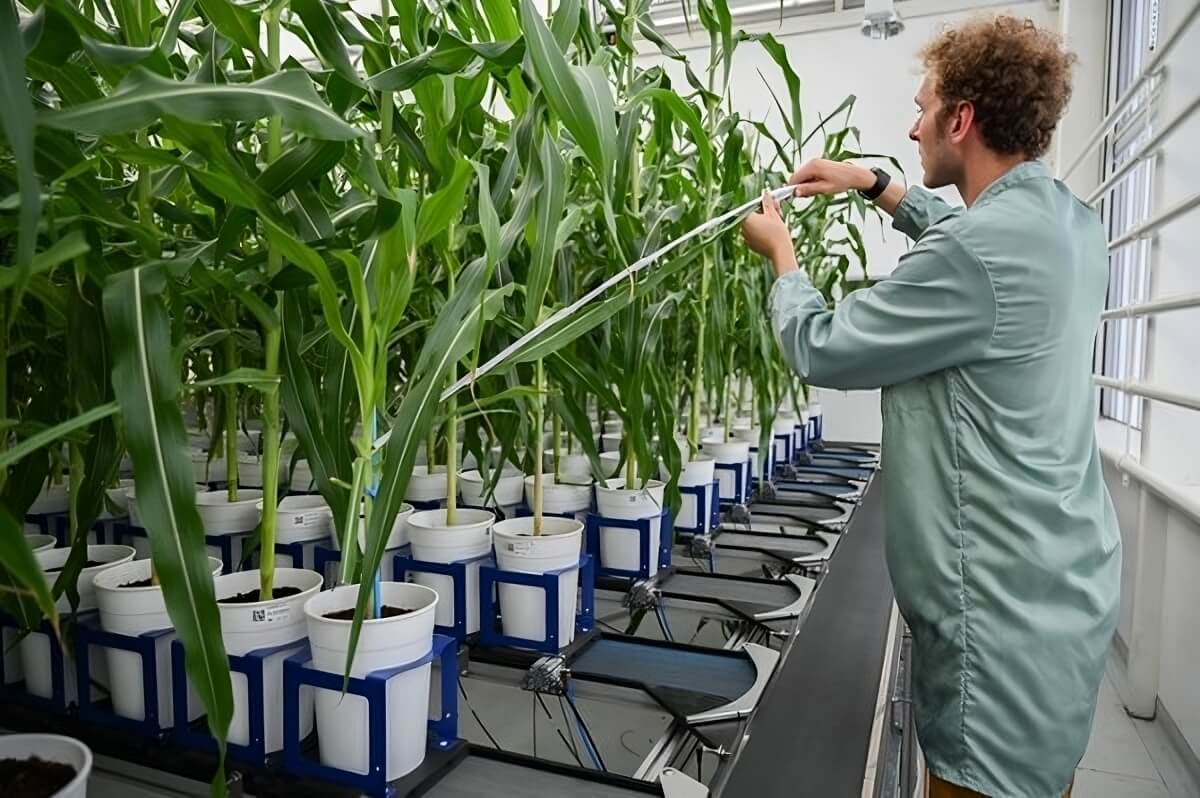
Belgium: VIB acquires CropDesign site from BASF and launches its first agricultural biotechnology incubator
VIB, a leading life sciences institute in Flanders, has signed an agreement with BASF to acquire its CropDesign site in Nevele, Belgium. VIB and CropDesign have had a close scientific relationship for more than 15 years. CropDesign, currently part of BASF’s Agricultural Solutions division, was established in 1998 as a VIB spinoff and has grown into a biotech company specializing in plant phenotyping technology. The divesture includes site infrastructure and intellectual property. All former CropDesign employees found new jobs within or outside BASF.
VIB will establish a plant science and agricultural technology incubator at the CropDesign site. These facilities will serve as Flanders’ premier center for agricultural biotechnology (AgBio) innovations for start-ups. VIB will provide a physical space for early-stage companies that work on the future of sustainable agriculture and food production, offer greenhouse space and provide an environment for likeminded companies. Together with ILVO, the Flanders research institute for agriculture, fisheries and food, VIB will also deliver mentoring programs, explore collaborative opportunities and unlock networks to help early-stage companies mature quickly.
The initiative is backed by the Flemish government to support economic recovery after the coronavirus pandemic in Flanders.
“Our vision is to establish Flanders’ first AgBio incubator as the driving force behind innovations that produce the agricultural solutions of tomorrow. This will further fuel the growth of the AgBio R&D cluster around Ghent. With the acquisition of the CropDesign site, we want to create opportunities for entrepreneurs to develop their company in Flanders, taking advantage of the unique life sciences ecosystem and bringing high value jobs to the area,” said Jérôme Van Biervliet, Managing Director at VIB.
“Plant science with an emphasis on sustainability and climate change is an important sector for us at VIB. Leveraging the phenotyping platform will allow us to complement our commitment to support agricultural research and dedicated companies,” added Dirk Inzé, Science Director of VIB-UGent Center for Plant Systems Biology.
“By divesting our CropDesign site, we enable our long-term partner VIB to further develop and apply the innovative phenotyping technology in which CropDesign is highly skilled,” said Linda Trolinder, Senior Vice President Research & Development Seeds & Traits at BASF’s Agricultural Solutions division. “In the past years, we have developed many innovations in phenotyping at CropDesign that are successfully used at different BASF sites around the world. At the same time, this move allows us to adapt our portfolio and to focus even more on future key projects of our business strategy. We are proud of our long-standing commitment to the scientific community in the Ghent area.”